
Home / New boilers, fitted properly, priced honestly
New boilers, fitted properly, priced honestly
Worcester Bosch, Vaillant, Baxi and Glow-worm boilers sized for your actual house rather than whatever we happen to have in the van. Most swaps are done in a day.
From £2,211 fitted, including VAT
Boilers we supply and install




How we work out which boiler you need
Boiler sizing is the part most people never see and the part that causes the most trouble later. Fit one that is too small and you get lukewarm showers when two taps run at once. Fit one that is too big — which happens far more often, because it is the easy way to avoid complaints — and it cycles on and off all winter, wears itself out and costs you more to run.
We size on the number of bathrooms, the number of radiators, the incoming mains flow rate and how the household actually uses hot water. If your mains pressure will not support a combi, we will tell you that rather than fit one anyway and leave you to find out in February.
An honest word on combis. They suit most three and four-bedroom homes and free up the airing cupboard. They are the wrong answer for a house with three bathrooms in regular use, or where the incoming water main is weak. Anyone who recommends a combi without asking about your mains flow rate has not done the sizing.
What is in the price
- The boiler, with its full manufacturer guarantee
- Installation by a Gas Safe registered engineer
- A full system flush to clear out sludge
- Cleaner and long-life inhibitor
- A magnetic filter, fitted as standard
- Controls and smart thermostats available — your choice, priced separately
- Pipework alterations the swap needs
- Removing and disposing of the old boiler
- Building control notification and certificates
- Warranty registered with the manufacturer for you
Guide prices
These are fitted prices including VAT for a straight swap in the same position. Conversions, relocations and back boiler removals cost more, and the quote tool adds those in automatically.
| Home | Typical boiler | Budget range | Premium range |
|---|---|---|---|
| Up to 3 bedrooms, one bathroom | 24–30kW combi | £2,211 | £3,001 |
| 4 bedrooms, or a bathroom plus en-suite | 35–36kW combi | £2,695 | £3,933 |
| 5+ bedrooms, two showers at once | 40kW combi or system | £3,095 | £3,795 |
| Converting a cylinder system to a combi | Add to the above | From +£900 | From +£900 |
| Removing an old back boiler | Add to the above | +£1,250 | +£1,250 |
| Moving the boiler elsewhere in the same room | Add to the above | +£550 | +£550 |
| Moving the boiler to another room | Add to the above | +£750 | +£750 |
| Moving the boiler into the loft | Add to the above | +£900 | +£900 |
Our most popular boilers
Fitted prices including VAT for a straight swap. Your own price depends on your house, and the quote tool works it out in about ninety seconds.

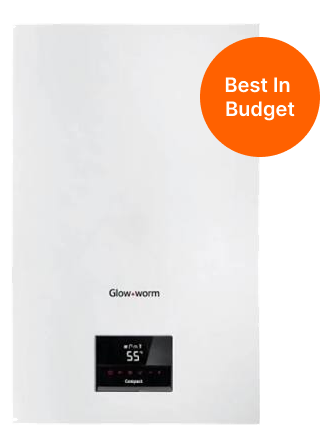

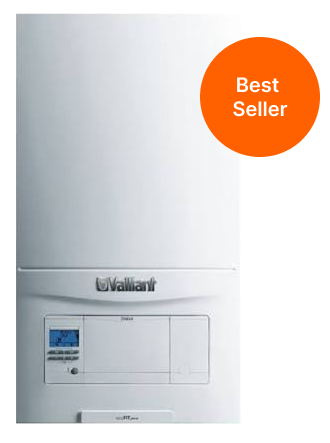
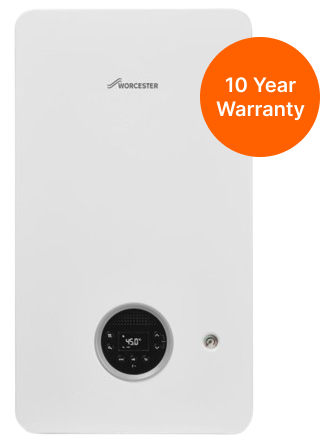

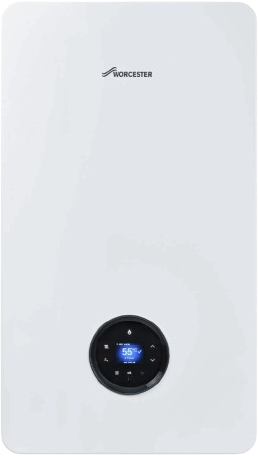
Worcester Greenstar 8000 Life
10-year guarantee
Fitted from
£3,395
or £87 a month on 0% finance
Get my priceBrands we install
We are not tied to one manufacturer, which means we can recommend on merit rather than on what earns us the most. Worcester Bosch and Vaillant are the two we fit most often and the two we would put in our own homes. Baxi and Glow-worm do a genuinely good job at a lower price and suit plenty of households perfectly well.
Whichever you choose, the guarantee comes from the manufacturer, not from us, so it stands regardless of what happens to any installer. Guarantees currently run from seven to twelve years depending on the model. They do all require an annual service to stay valid, which is the single most common reason people lose cover.
Common questions
How long does the installation take?
A like-for-like swap is normally a single day. Converting from a cylinder system to a combi, or moving the boiler, usually takes two. We will tell you which yours is before the day, not on it.
Will I be without heating and hot water?
Only for the working day itself. We drain down in the morning and you are back on by the evening in almost every case. If a job does have to run into a second day we will make sure you have hot water overnight wherever it is possible.
What if the survey changes the price?
We tell you straight away and you decide whether to go ahead. We do not start work and then present you with extras. If you walk away at that point, you owe us nothing.
Can I spread the cost?
Yes, including interest-free options over a fixed term. Finance is arranged through Phoenix Financial Consultants and is subject to status and credit checks. A decision usually takes a few minutes.
Do you take the old boiler away?
Yes, and we dispose of it properly. That is in the price, not an extra on the day.
What happens about paperwork?
We notify building control, issue your gas safety and commissioning certificates, and register the guarantee with the manufacturer on your behalf. You get copies by email.

Gas Safe registered
Reg. 300222

Checkatrade approved
9.67 / 10

FCA authorised
Ref. 1058977

Family run
Since 2019
Checked, registered and accountable
Anyone can put a van sticker on and call themselves a heating engineer. These four are the ones that actually mean something, and we will show you any of them before you let us near your boiler.
- Gas Safe registration is a legal requirement for gas work, and it is what makes your installation notifiable and your manufacturer guarantee valid.
- Checkatrade verifies every review against a real job, so the 9.67 is not something we wrote about ourselves.
- FCA authorisation means the finance side is regulated rather than arranged on a handshake.
- Family run is not a certificate, but it is the reason the person quoting your job is the person accountable for it.
Where we work
We are based in Guildford and cover everything inside the orange line — thirty-one areas across Surrey and into south-west London. Tap any town to see what we do there.

Map data © OpenStreetMap contributors
Do we cover you?
Pop your postcode in and we will tell you straight away.
Most of our work is within half an hour of the door. That is deliberate — it is why we can usually reach a breakdown the same day.
Woking and north Surrey
Mid and east Surrey
South-west London
Accredited and checked by




Choosing a new boiler in Surrey: the full picture
The four numbers that decide everything
Every sensible boiler recommendation comes down to four measurements, and any quote given without them is guesswork dressed up as advice.
Your mains flow rate is how many litres a minute your incoming supply delivers. It is measured with a weir gauge, takes two minutes, and it caps everything a combi can ever do. Under 10 litres a minute and a combi will disappoint you no matter which one you buy. Between 10 and 14 it will run one good shower. Above 15 it can support two outlets if the boiler is sized to match. A boiler advertised at 16 litres a minute cannot deliver 16 if your street brings in 11 — the boiler figure is a ceiling, not a promise.
Your hot water outlets means baths plus separate shower cubicles, not bedrooms. A four-bedroom house where everyone leaves at different times has lower peak demand than a three-bedroom house where three people shower between seven and half past. Peak simultaneous demand is what matters, and it is worth being honest with yourself about it.
Your radiator count and their sizes sets the heating output, which is a completely separate figure from hot water output. Twenty radiators on a cold January morning need a boiler that can actually lift them all to temperature within a reasonable time.
Your heat loss is the rate at which the building sheds warmth, driven by wall construction, insulation, glazing and exposure. A solid-walled Victorian terrace and a modern insulated semi of identical floor area can differ by a factor of two.
Combi, system or regular: how the decision actually goes
A combi heats water on demand with no storage. It never runs out, it frees the airing cupboard, and it removes loft tanks entirely. Its weakness is simultaneous demand, because the flow rate is shared across every open outlet.
A system boiler stores hot water in a cylinder at mains pressure. Two showers can run at once without either noticing. The store is finite, so a household that runs three showers back to back will empty a cylinder and wait for reheat. The cylinder takes a cupboard and, being a pressure vessel, legally requires an annual service.
A regular boiler keeps the loft tanks and the vented cylinder. It looks old-fashioned and installers often push to remove it, but it remains the right answer for large period properties on sound original pipework, for homes with genuinely poor mains pressure where the tank provides a useful buffer, and for anyone who wants a new efficient boiler rather than a two-day project.
The short version: one bathroom, get a combi. Two bathrooms used at different times, a combi sized properly. Two or more used simultaneously, or a weak main, get a cylinder. Large period property on good pipework, keep what you have and modernise it.
Why oversizing is the expensive mistake, not the safe one
There is a persistent belief that a bigger boiler is the cautious choice. The opposite is true, and understanding why saves real money.
A boiler substantially larger than its house lifts the radiators to temperature quickly, satisfies the thermostat and shuts down. Minutes later the temperature drops and it fires again. That cycle repeats all winter. It is called short cycling, and every ignition is a moment of inefficiency, extra wear on the fan, the ignition electrode and the diverter valve, and a boiler that never settles into the steady low-output condensing mode where it is genuinely efficient.
Condensing boilers only condense — and only reach their advertised efficiency — when return water is cool enough for the flue gases to give up their latent heat. An oversized boiler hammering a small system keeps return temperatures high and rarely condenses at all, which means you paid for an efficiency figure you will never see.
Oversizing is common because it is safe for the installer. Nobody complains their house is too warm. It is not safe for the person paying the gas bill or replacing the boiler in year eight instead of year fifteen.
Radiator sizing and flow temperature
Modern boilers are at their most efficient running at lower flow temperatures. Turning a boiler down from 75 to 60 degrees can lift real-world efficiency by several percent with no loss of comfort, provided the radiators are large enough to give out the required heat at the lower temperature.
That proviso matters. Radiators emit heat in proportion to the difference between their surface and the room. Feed the same radiator cooler water and it emits less. Many Surrey homes have radiators sized decades ago for a boiler running hot, and simply turning the new boiler down leaves rooms cool. The fix is either larger radiators in the worst rooms, or accepting a higher flow temperature and the efficiency penalty that comes with it. We will tell you which applies to your house rather than leaving you to discover it in January.
System cleanliness: the part that decides how long it lasts
Steel radiators corrode from the inside. The product is magnetite, a fine black iron oxide sludge that settles at the bottom of radiators and in pipe bends. It is abrasive, it blocks the narrow waterways in a modern heat exchanger, and it destroys pumps.
Connecting a new boiler to a dirty system pushes all of that through the most expensive component on day one. Every serious manufacturer requires the system to be cleaned and a filter fitted; skipping it can void the guarantee entirely, which turns a heat exchanger failure in year five into a four-figure bill.
A chemical clean is adequate on a reasonably clean system. A full powerflush is the answer where radiators are cold at the bottom, where the water runs black from a drain-off, or where the system has never been treated. We will tell you which yours needs and we will show you the water.
Controls, and why they matter more than the badge
A house with a single hall thermostat heats the entire building to whatever the hall needs, all day, including bedrooms nobody enters until ten at night. Splitting a home into zones, fitting thermostatic valves throughout and adding a smart control that knows when the house is empty costs a fraction of a boiler and frequently saves more.
Load compensation and weather compensation go further still, modulating flow temperature against outside conditions so the boiler spends more of its life condensing. If a company quotes you a boiler and never mentions controls, they are selling you a box rather than designing a system.
Guarantees: what is actually covered
Guarantee length ranges from five to twelve years depending on manufacturer and model. Three conditions apply almost universally, and all three catch people out.
The boiler must be registered with the manufacturer within a set window after installation — a good installer does it on the day and hands you the paperwork. The system must have been cleaned and a filter fitted at installation. And the boiler must be serviced annually by a competent person, with a written record. Miss the annual service and the cover can lapse entirely, which is the single most common reason people discover the guarantee they were relying on no longer exists.
Building regulations and what gets notified
A boiler replacement is notifiable work under Building Regulations. A Gas Safe registered engineer notifies it to building control on your behalf and you receive a certificate. That certificate matters when you sell the house — a conveyancing solicitor will ask for it, and its absence causes delay or a retention.
Flue terminals have minimum distances from openings, boundaries and anything above them. Condensate must discharge correctly and, where it runs externally, must be adequately sized and insulated against freezing. These are not optional refinements; they are the difference between a compliant installation and one that fails at the first inspection.
Questions we get asked
How long does a new boiler installation take?
A straight swap is usually one day. Converting from a cylinder system to a combi, removing a back boiler, or relocating the boiler is normally two days. We tell you which yours is before you book, not on the morning.
Do I need to be at home for the whole installation?
No, but we need you at the start to confirm positions and at the end for handover and to show you the controls. Most people are in and out during the day and that is fine.
Will a new boiler lower my gas bill?
Usually, and the older the boiler being replaced the bigger the difference. Replacing a non-condensing boiler from the early 2000s typically produces a noticeable saving. Replacing a ten-year-old condensing boiler saves far less, and anyone promising dramatic savings there is overselling.
What size boiler do I need?
It depends on your bathrooms and showers, your radiator count and your measured mains flow rate, not on the size of your old boiler. Our quote tool works it out in about ninety seconds and we confirm it at survey.
Can you install a boiler in a loft or garage?
Yes. Both need frost protection and safe permanent access, and a loft installation needs boarding and lighting to comply. We will tell you what your specific position requires.
Do you notify building control?
Yes. Every gas installation is notified by us and you receive the certificate. Keep it: your solicitor will ask for it when you sell.
Get a price without anyone knocking on your door
Answer a few questions and see real numbers in about ninety seconds. No sales visit needed to find out roughly what it costs.