
Home / Boiler servicing
Boiler servicing
A proper annual check rather than a quick glance and a sticker. Takes about an hour, keeps your guarantee valid, and catches the faults that would otherwise pick a cold Sunday in January to appear.
£89 for a full service
What we actually check
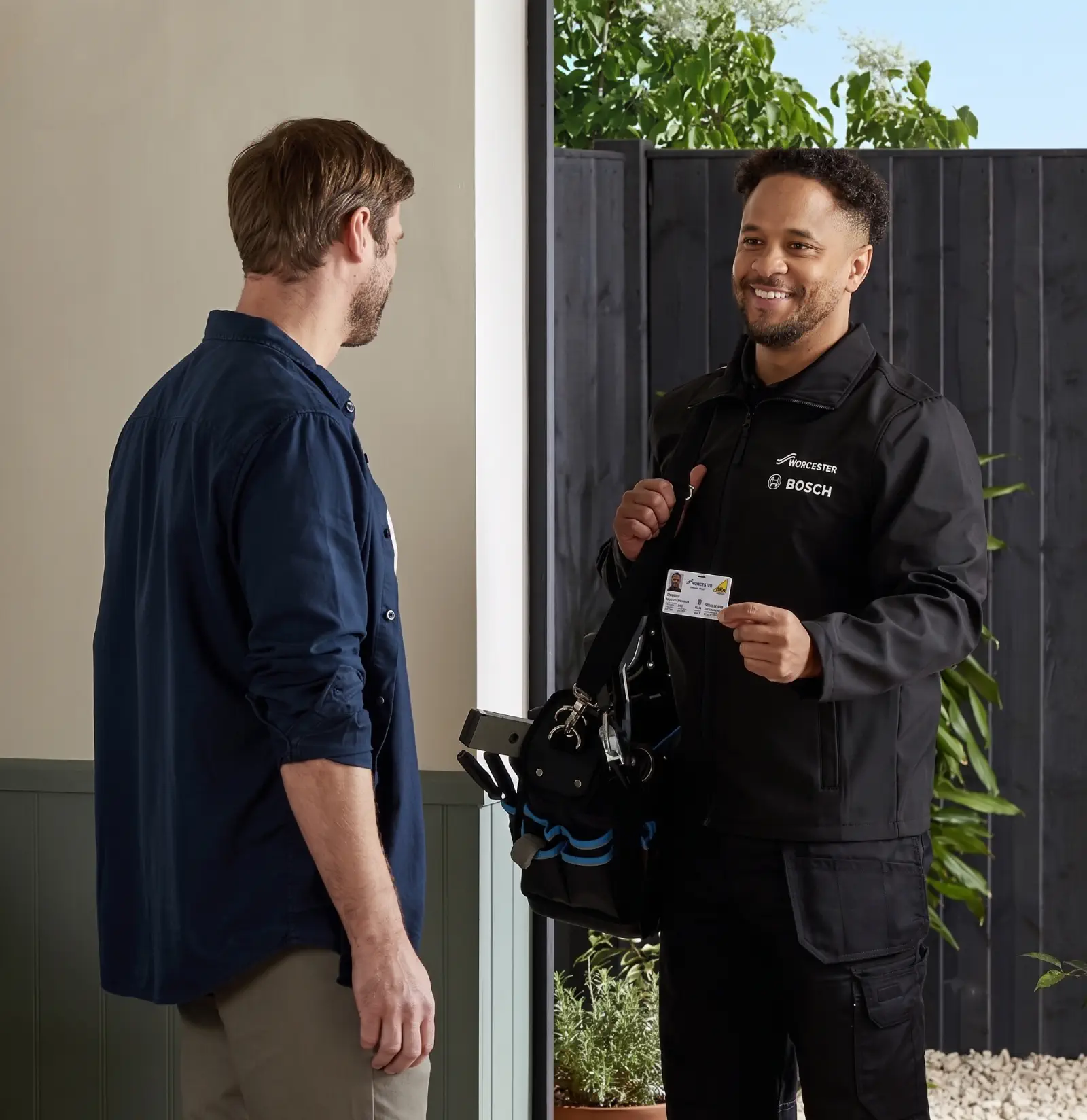
A service that takes fifteen minutes is not a service. Ours takes around an hour on a typical domestic boiler, and this is what that hour covers.
- Gas pressure and gas rate against the manufacturer's figures
- Flue gas analysis, checking combustion is burning correctly
- Flue and its terminal, inside and out
- Heat exchanger checked and cleaned where needed
- Burner and injectors
- All seals and joints tested for soundness
- Safety devices and cut-offs operated
- Expansion vessel pressure checked and re-charged
- Condensate trap and pipework cleared
- Controls, thermostat and system pressure set correctly
You get a written record of the readings. If something is drifting out of tolerance but is not yet a fault, we tell you now so you can plan for it rather than be ambushed by it.
Why it matters more than people think
Two reasons, and the first is the one that costs money. Almost every manufacturer guarantee requires a documented annual service. Miss one and the cover can be void, which means a heat exchanger failure in year six goes from a free warranty claim to a bill running into four figures.
The second is that boilers rarely fail without warning. Pressure creeping down, a slightly high flue gas reading, a tired expansion vessel — these are cheap to sort in September and expensive to sort at eleven o'clock on Christmas Eve.
Book it before October if you can. Every heating engineer in Surrey is flat out from the first cold snap onwards. Late summer and early autumn is when you get the pick of the appointments, and it is when a fault found is a fault you can plan around.
Prices
| Service | What it covers | Price |
|---|---|---|
| Annual boiler service | Full check as listed above, with written readings | £89 |
| Landlord gas safety certificate (CP12) | Statutory safety check on all gas appliances, certificate issued | £99 |
| Service and certificate together | Both, same visit | £139 |
| Additional gas appliance | Hob, fire or second boiler on the same visit | £35 |
Any parts needed are quoted and agreed with you before we fit them. Nothing gets replaced without you saying yes first.
Landlords
If you let property, a gas safety check on every gas appliance is a legal requirement every twelve months and the certificate has to be given to your tenants. We handle blocks and portfolios as well as single lets, deal directly with tenants to arrange access, and send certificates through by email the same day.
If you manage several properties, ask us about scheduling them together — it is simpler for you and cheaper than booking them one at a time.
Common questions
How long does a service take?
About an hour for a standard domestic boiler. Longer if it has not been serviced for several years and the heat exchanger needs proper cleaning.
Does a service keep my guarantee valid?
Yes, and in most cases it is the condition the guarantee depends on. Keep the paperwork — manufacturers ask for it when you claim.
What if you find a fault?
We explain what it is, what it costs to put right and how urgent it is. You decide. We never fit a part without agreeing it with you first.
Can you service a boiler you did not install?
Of course. Most of the boilers we service were fitted by somebody else.
What is the difference between a service and a gas safety certificate?
A service is a maintenance check on how well the boiler is running. A gas safety certificate is a statutory safety inspection of all gas appliances, required by law for rented property. They overlap but they are not the same thing, which is why we offer them together.
Where we work
We are based in Guildford and cover everything inside the orange line — thirty-one areas across Surrey and into south-west London. Tap any town to see what we do there.

Map data © OpenStreetMap contributors
Do we cover you?
Pop your postcode in and we will tell you straight away.
Most of our work is within half an hour of the door. That is deliberate — it is why we can usually reach a breakdown the same day.
Woking and north Surrey
Mid and east Surrey
South-west London
Accredited and checked by





Boiler servicing in Surrey: what a proper service involves
Why fifteen minutes is not a service
There is an enormous difference between a visual check and a service. A visual check confirms the boiler lights and produces heat. A service measures whether it is burning correctly, whether the safety devices operate, and whether anything is degrading before it fails.
A genuine service on a typical domestic boiler takes around an hour. If somebody is in and out in fifteen minutes with a sticker, you have paid for a sticker.
What we measure, and why each one matters
Gas rate. We measure the actual gas consumption against the manufacturer's stated figure. A boiler running rich wastes fuel and produces more carbon monoxide; running lean it may not reach output and can suffer flame instability.
Flue gas analysis. A calibrated analyser samples the products of combustion and reports the ratio of carbon monoxide to carbon dioxide. This single reading tells us more about combustion health than anything else, and it is the only way to know the burner is behaving.
Flue integrity, inside and out. We check the seals, the terminal, and where possible the run. A degraded flue seal can allow products of combustion into the property, which is the failure mode that actually kills people.
Heat exchanger condition. Inspected and cleaned. Fouling reduces heat transfer, raises flue gas temperature and gradually pushes the boiler out of condensing mode.
Burner and injectors. Examined for corrosion and deposits, and cleaned where required.
Gas soundness. Every joint and seal tested for leakage.
Safety devices. Overheat cut-offs, flame supervision and any pressure switches operated and confirmed working.
Expansion vessel. Pressure checked and recharged. A flat vessel is the most common cause of a system that loses pressure repeatedly, and it is routinely missed.
Condensate trap. Cleared. A blocked trap is the most frequent cause of a boiler locking out in the first cold snap.
System pressure and controls. Set correctly and demonstrated to you.
You get the actual readings recorded, not a date on a sticker. That record is what makes next year's service a comparison rather than a guess, and it is what a manufacturer will ask for if you ever claim on the guarantee.
Landlord gas safety certificates
If you let residential property, the Gas Safety (Installation and Use) Regulations require an annual safety check on every gas appliance and flue in the property, carried out by a Gas Safe registered engineer. You must give a copy of the record to existing tenants within 28 days, and to new tenants before they move in.
The check and a service are not the same thing. A safety check confirms the appliance is safe. A service goes further and maintains it. Doing both on one visit costs less than doing them separately and keeps the appliance reliable rather than merely legal.
Records must be kept for two years. Penalties for non-compliance are serious, and in the event of an incident the absence of a record is the first thing that will be examined. We arrange access with tenants directly, which is the part letting agents find most useful, and email certificates through the same day.
Carbon monoxide: the reason any of this exists
Carbon monoxide has no colour, no smell and no taste. Symptoms resemble flu — headache, nausea, dizziness, tiredness — which is exactly why it is so dangerous: people assume they are unwell rather than being poisoned.
Warning signs on an appliance include a lazy yellow or orange flame where it should be crisp and blue, black or sooty marks around the casing, a pilot light that repeatedly goes out, and excessive condensation in the room. If you notice any of these, stop using the appliance.
An audible carbon monoxide alarm to BS EN 50291 should be fitted in any room with a fuel-burning appliance. They cost very little. If you smell gas, ring the National Gas Emergency Service on 0800 111 999 immediately — it is free and operates 24 hours.
When to service, and what it saves
Annually, and ideally in late summer or early autumn rather than December. Two reasons: engineers are less stretched so you get a date that suits you, and a fault found in September is an inconvenience while the same fault in January is an emergency with nobody available.
The financial case is straightforward. A service costs less than a single call-out. A neglected system loses efficiency gradually — a fouled heat exchanger and a sludged system can add a noticeable amount to a winter's gas bill. And the guarantee point is decisive: almost every manufacturer requires documented annual servicing, so one missed year can convert a free warranty repair into a bill running into four figures.
Questions we get asked
How often should a boiler be serviced?
Once a year. Almost every manufacturer guarantee requires it and the record is what a claim depends on.
What is the difference between a service and a safety check?
A safety check confirms the appliance is safe to use. A service goes further, cleaning and maintaining components and measuring performance. Landlords legally need the check; everyone benefits from the service.
When is the best time of year to service a boiler?
Late summer or early autumn. Engineers are less stretched so you get a convenient date, and a fault found in September is an inconvenience rather than a January emergency.
Can you service a boiler you did not install?
Yes, any make. If you have inherited a boiler with a property and have no service history, that is a very common starting point.
Do I need a landlord gas safety certificate for every appliance?
Every gas appliance and flue in the property, annually. Tenants must receive a copy within 28 days, and new tenants before they move in. Records must be kept for two years.
What happens if the service finds a problem?
We tell you what it is, what it costs and how urgent it is. Nothing gets repaired without you agreeing first.
Get a price without anyone knocking on your door
Answer a few questions and see real numbers in about ninety seconds. No sales visit needed to find out roughly what it costs.